


-
About
Table of Contents
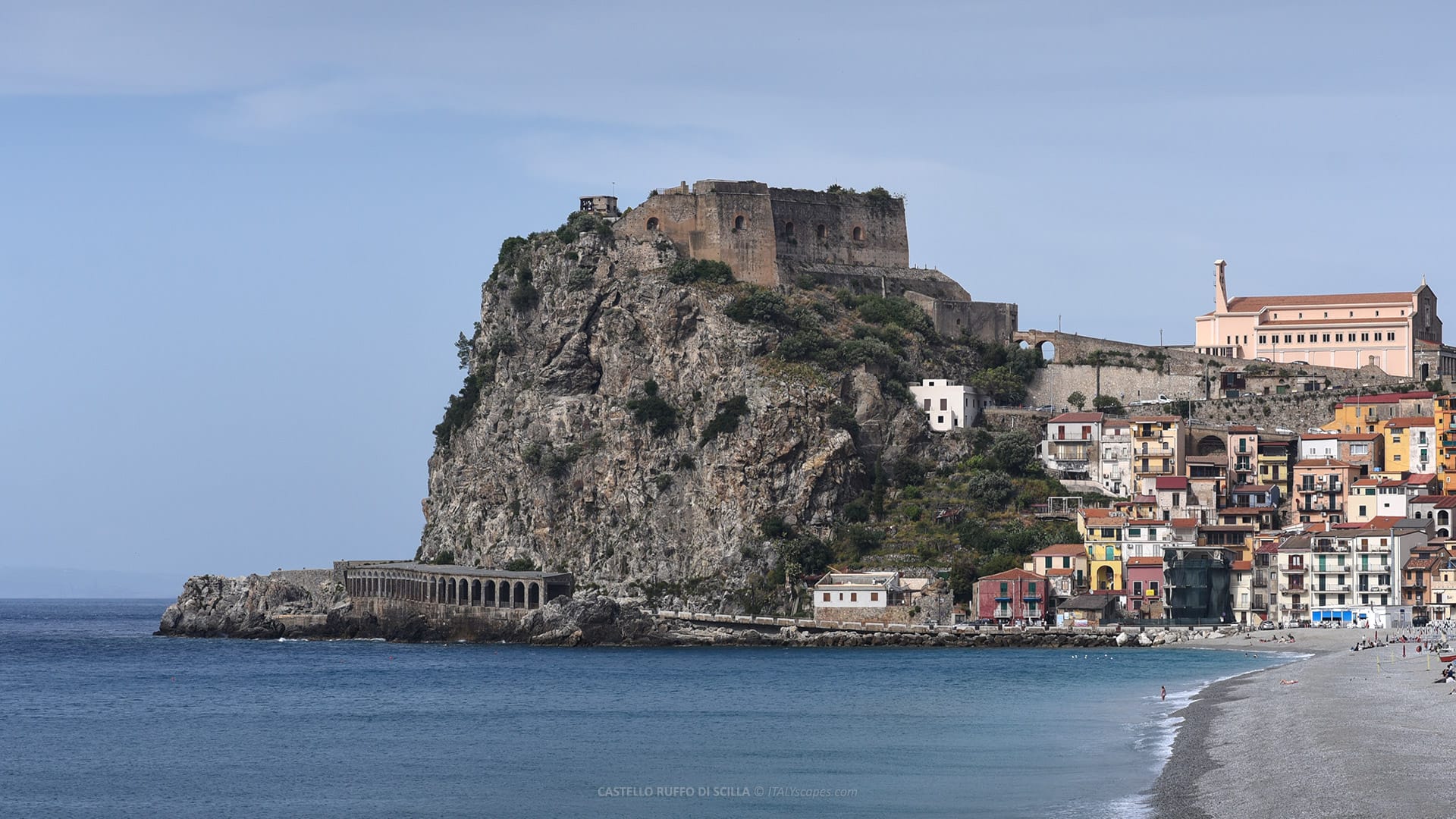
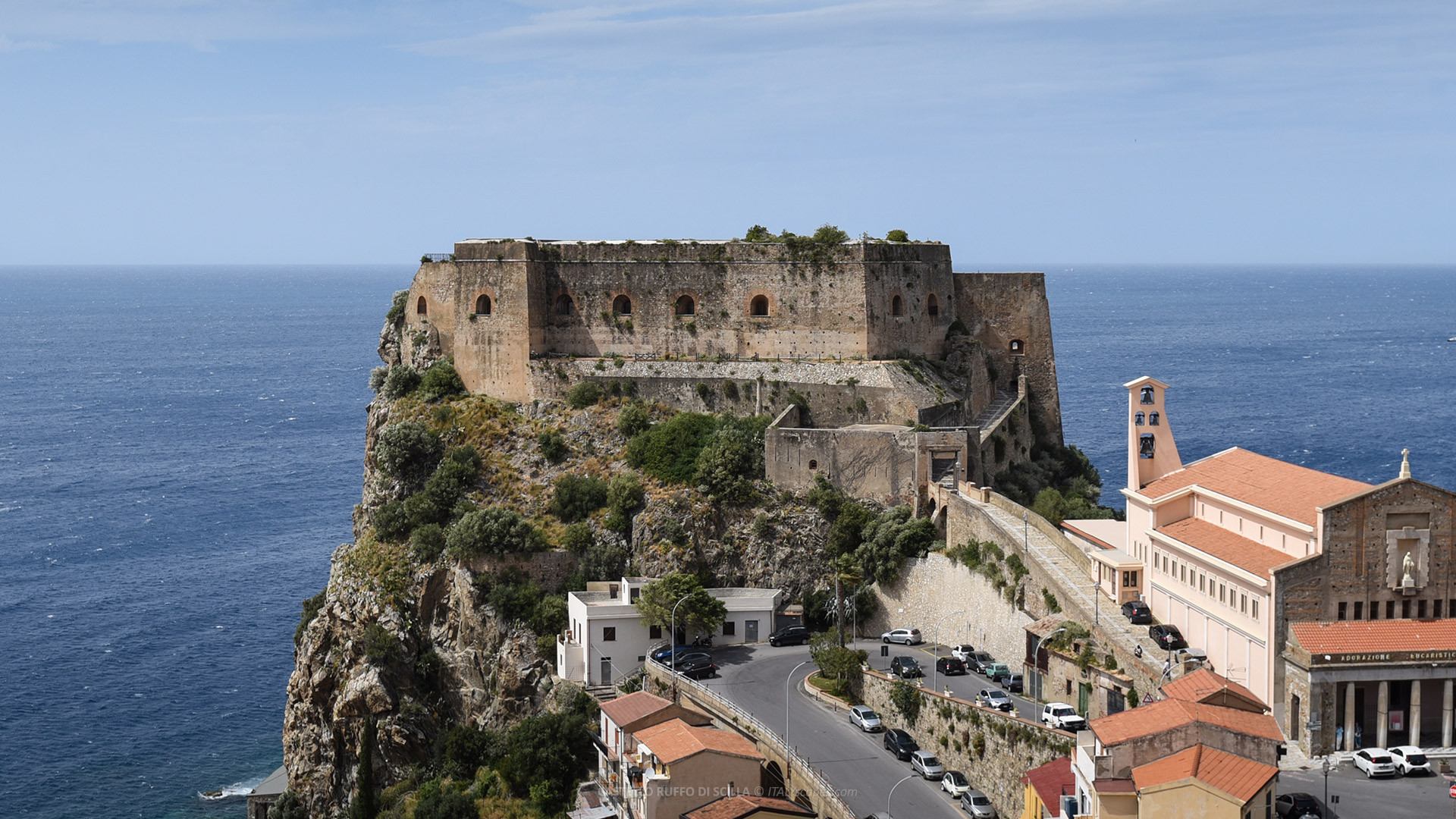
Ruffo Castle (Castello Ruffo di Scilla), also known as Castello Ruffo di Calabria, is an ancient fortress standing on the rocky promontory of Scilla, along the southern coast of the Strait of Messina.
The Ruffo Castle dominates the surrounding landscape and represents one of the most recognizable historical landmarks of Calabria.
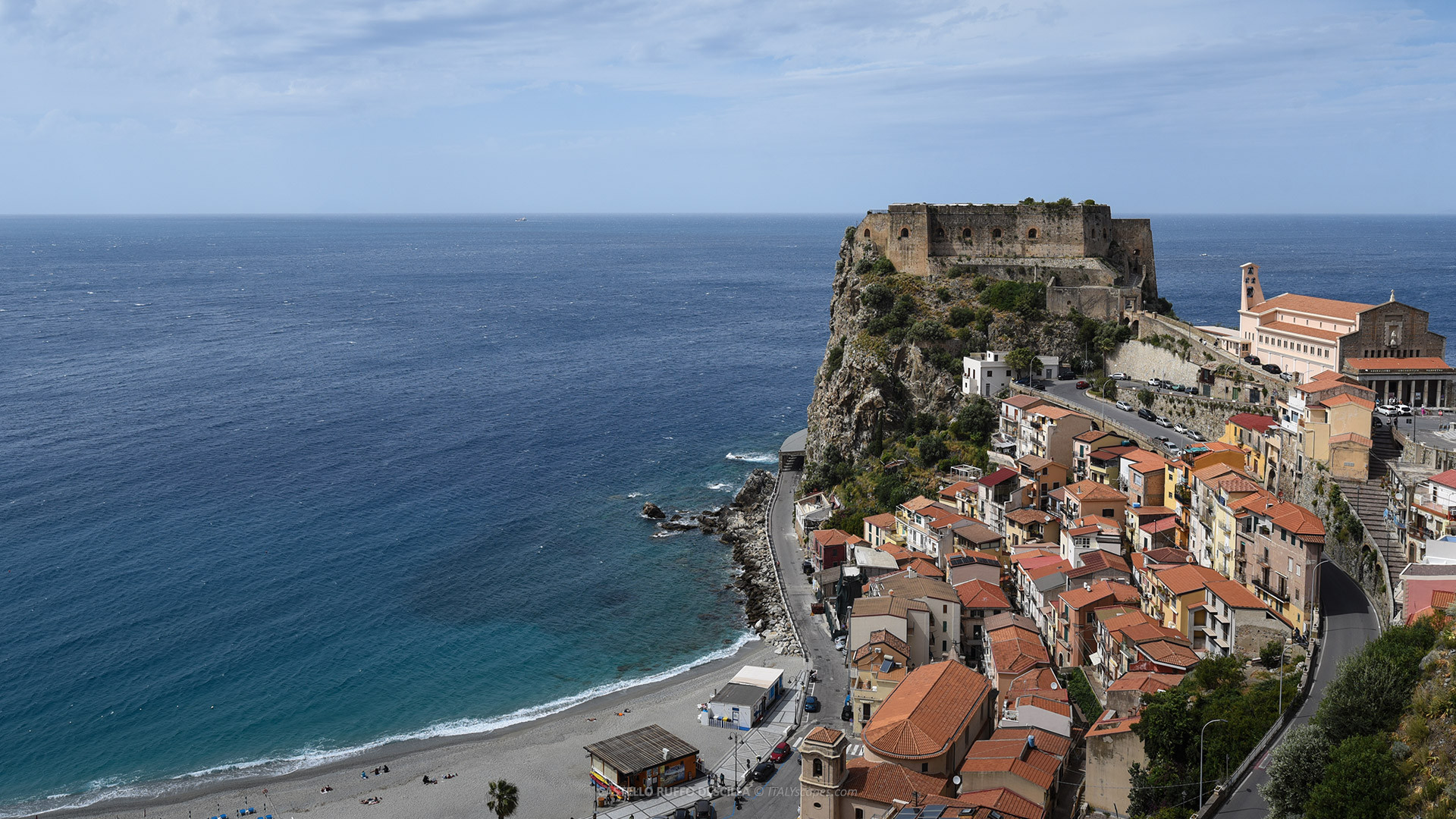
The Ruffo Castle overlooks the historic district of Chianalea and controls one of the narrowest points of the Strait of Messina. Because of this strategic position, the castle played a major military and defensive role for many centuries.
The rocky cliff on which the Ruffo Castle stands has been inhabited since antiquity. Ancient Greek tradition associated the place with Scylla, the mythological sea monster described by Homer in the Odyssey.
Throughout history, Greeks, Romans, Byzantines, Normans, Angevins, Aragonese rulers, and the Ruffo family transformed and expanded the fortress according to military and political needs.
Today, the Ruffo Castle is one of the most important cultural monuments in southern Italy. Besides its historical significance, the castle offers panoramic views over the Strait of Messina and the Sicilian coast.
Short History of the Ruffo Castle (Castello Ruffo di Scilla)
Origins of the Fortress
The first fortified structure on the rock of Scilla dates back to the beginning of the 5th century B.C.. During the rule of Anaxilas of Reggio, the area gained strategic importance for controlling navigation through the Strait of Messina.
In 493 B.C., according to historical sources, Anaxilas defeated Tyrrhenian pirates who used Scilla as a secure maritime base. After the victory, he strengthened the site by constructing a fortress intended to control sea routes and defend the coast.
The fortification remained under the authority of the rulers of Reggio Calabria for decades. During this period, the area was frequently involved in conflicts linked to piracy and the control of Mediterranean trade routes.
Greek and Roman Periods
In 390 B.C., Dionysius I of Syracuse conquered the fortress after a long siege. The Syracusan ruler expanded his influence across southern Italy and Sicily, transforming Scilla into an important military outpost.
About fifty years later, the city regained greater autonomy. This development was connected to the campaigns of Timoleon of Corinth, who weakened the tyrannical power previously established in Syracuse.
During the Roman period, Scilla continued to maintain strategic importance. The promontory remained an observation point along the maritime routes connecting the Italian Peninsula with Sicily and the eastern Mediterranean.
Byzantine and Norman Periods
After the fall of the Western Roman Empire, the fortress became part of the Byzantine defensive network in southern Italy. The Byzantines reinforced coastal fortifications in Calabria because of repeated attacks coming from the sea.
During the early Middle Ages, Arab incursions threatened many coastal settlements in Calabria. The fortress of Scilla was repeatedly restored and adapted to changing military requirements.
In 1060, during the Norman conquest of Calabria, the castle resisted the siege conducted by Robert Guiscard. Historical accounts report that the defenders surrendered only after suffering severe famine.
After the conquest, Robert Guiscard placed a Norman military garrison inside the fortress. Under Norman control, Scilla became an important defensive center overlooking the Strait of Messina.
Powered by GetYourGuideSwabian and Angevin Interventions
During the Swabian period, the fortress underwent additional strengthening works. In 1255, King Manfred of Sicily entrusted Pietro Ruffo with reinforcing the castle and organizing a permanent military presence.
The Ruffo family became one of the most influential noble dynasties in Calabria. Their long association with the fortress eventually gave the Ruffo Castle its current name.
In the second half of the 13th century, Charles I of Anjou promoted new defensive interventions. The Angevin rulers considered Scilla essential for controlling communications between Naples and Sicily.
The Ruffo Castle was also involved in the conflicts related to the War of the Sicilian Vespers. Because of its position above the strait, the fortress had considerable military value during the struggles between Angevin and Aragonese forces.
Aragonese and Ruffo Family Period
In 1469, King Ferdinand I of Naples granted the castle to Gutierre De Nava, a Castilian knight close to the Aragonese court. De Nava ordered restoration works and expanded several parts of the fortress.
The interventions executed during the 15th century adapted the defensive structure to the growing importance of artillery and firearms in military warfare.
In 1533, Paolo Ruffo purchased the castle. The Ruffo family restored the structure and transformed part of the fortress into a noble residence while preserving its defensive functions.
The entrance portal still preserves the Ruffo coat of arms. An inscription commemorates restoration works completed during the 16th century under the authority of the family.
Earthquakes and Modern Transformations
The devastating earthquake of 1783 caused severe damage throughout Calabria and the Strait of Messina area. The Ruffo Castle also suffered important structural damage because of the violent seismic activity.
At the beginning of the 19th century, the fortress became State property. Restoration works started around 1810 under the Bourbon administration.
During the Napoleonic period, the Strait of Messina represented a strategic frontier between the Kingdom of Naples and Sicily. Coastal fortifications in Calabria continued to maintain military importance.
The earthquake of 1908 destroyed large sections of the ancient structure. Several historic parts of the fortress collapsed or suffered irreversible damage.
During the Fascist period, some internal rooms were divided into apartments intended for civil servants and public officials. This residential use altered several original spaces inside the complex.
Later, the Ruffo Castle was also used as a youth hostel. Despite these adaptations, the fortress preserved many architectural elements dating back to different historical periods.
Restoration and Current Use
Modern restoration campaigns focused on stabilizing damaged sections and recovering the historical identity of the monument. Conservation works preserved the castle’s military and architectural characteristics.
Today, the fortress hosts exhibitions, conferences, and cultural initiatives. The complex also houses the Regional Center dedicated to the restoration and recovery of Calabrian historical monuments.
The Ruffo Castle has become one of the principal cultural attractions of Calabria. Visitors are drawn both by its historical importance and by the panoramic views over the Strait of Messina.
Architecture of the Ruffo Castle (Castello Ruffo di Scilla)
General Structure
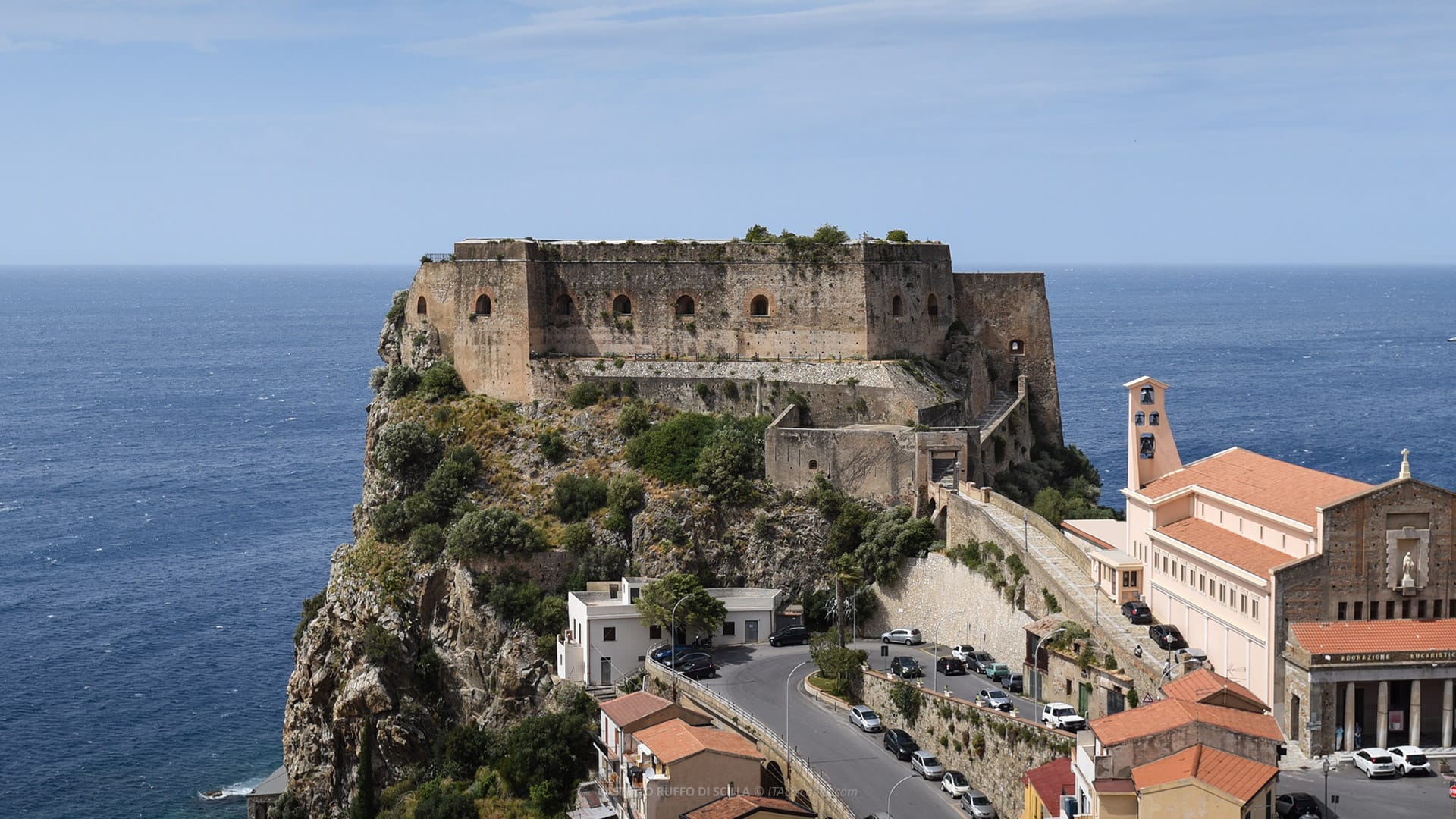
Castello Ruffo di Scilla has an irregular plan conditioned by the shape of the rocky promontory on which it stands. The structure incorporates architectural elements belonging to different historical periods.
The fortress developed progressively over earlier defensive constructions. Greek, medieval, Renaissance, and modern interventions remain visible in various parts of the complex.
The integration between architecture and landscape represents one of the defining features of Castello Ruffo di Scilla. The walls appear almost fused with the rocky cliff overlooking the sea.
Entrance and Defensive System
Access to the fortress is provided through a bridge leading toward the monumental entrance portal. The portal is characterized by a pointed stone arch typical of late medieval architecture.
Above the entrance remains the Ruffo family coat of arms. Nearby inscriptions commemorate restoration works executed during the 16th century.
After the entrance, visitors pass through a lowered vaulted hall connecting the external access area with the internal courtyard. This passage originally functioned as a controlled defensive space.
The castle walls follow the natural profile of the rock. This adaptation improved the defensive efficiency of the fortress while reducing vulnerable sections exposed to attack.
Several bastions and reinforced defensive walls date to the late medieval and Renaissance periods. These additions reflected the growing importance of artillery warfare.
The elevated position of the fortress allowed visual control over the Strait of Messina. Observation points and artillery positions overlooked the maritime routes between Calabria and Sicily.
Internal Spaces
The internal courtyard represents one of the central areas of the fortress. Staircases and corridors connect the different levels built along the rocky surface.
A large staircase leads toward the residential and representative sections of the complex. Some rooms preserve traces of later adaptations connected to administrative and institutional uses.
The interiors include halls with vaulted ceilings and spaces modified during later restoration campaigns. Different construction techniques reveal the multiple historical phases of the fortress.
Several rooms were altered after the earthquakes of 1783 and 1908. Subsequent restorations attempted to preserve the historical appearance of the structure.
The Lighthouse
Because of the strategic position of the fortress, a lighthouse was added in 1913 to assist ships crossing the Strait of Messina.
The lighthouse consists of a small white tower with a black base. It remains active today and is managed by the Italian Navy.
The lighthouse became an important navigational reference for vessels operating in one of the busiest maritime passages of southern Italy.
Modern Restoration
Modern restoration campaigns aimed to preserve the architectural authenticity of the fortress while adapting some areas for public access and cultural activities.
Today, visitors can explore courtyards, panoramic terraces, exhibition halls, and several restored sections connected to the cultural functions of the Ruffo Castle.
The panoramic terraces constitute one of the most characteristic elements of the fortress. From these elevated points, visitors can observe the Sicilian coast and the surrounding Calabrian landscape.
How to Get to the Ruffo Castle (Castello Ruffo di Scilla)
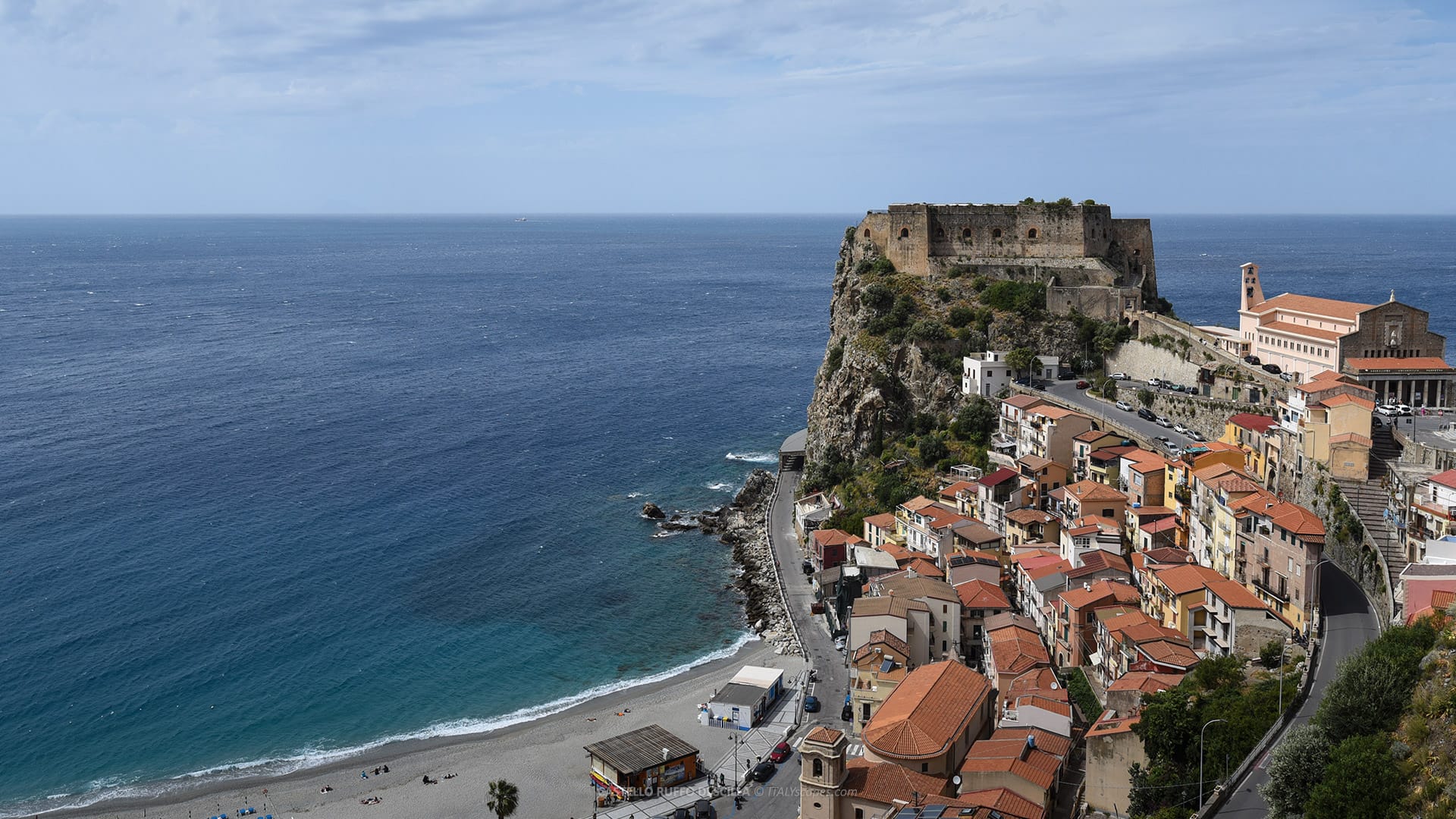
The Ruffo Castle is located in the upper section of Scilla, overlooking the historic district of Chianalea and the Strait of Messina. The fortress is visible from most parts of the town.
Getting to the Ruffo Castle on foot
The castle stands approximately 650 meters from Scilla railway station. The route can easily be completed on foot through the streets leading uphill toward the promontory. Because of the elevated position of the fortress, the final part of the route involves a relatively steep climb.
Getting to the Ruffo Castle by car
Scilla is connected by regional railway services operating along the Tyrrhenian coast of Calabria. The town can also be reached by car through the A2 motorway.
Frequently Asked Questions about Ruffo Castle (Castello Ruffo di Scilla)
Where is Ruffo Castle located?
Ruffo Castle is located on the rocky promontory of Scilla, in Calabria, overlooking Chianalea, Marina Grande, the Strait of Messina, and the Sicilian coast.
What is Ruffo Castle famous for?
Ruffo Castle is famous for its panoramic position, ancient defensive history, connection with the myth of Scylla, and spectacular views over the Strait of Messina.
How old is Ruffo Castle?
The first fortification on the rock is traditionally linked to the early 5th century BC, while the present castle developed through many later historical phases.
What can you see inside Ruffo Castle?
Visitors can see courtyards, vaulted passages, defensive walls, exhibition spaces, panoramic terraces, architectural traces from different periods, and views toward Sicily and Calabria’s coast.
How much does it cost to visit Ruffo Castle?
The listed ticket price is €5 for a full ticket, while entrance is free for children under 6 years old. Visitors should check seasonal opening updates.
How long does a visit take?
A normal visit takes about 45 to 60 minutes, enough to explore the main areas, enjoy the terraces, take photos, and read historical information.
Sources:Powered by GetYourGuide -
Photos
-
Map
-
Reviews

1 Review on “Ruffo Castle (Castello Ruffo di Scilla)”
Leave a Review

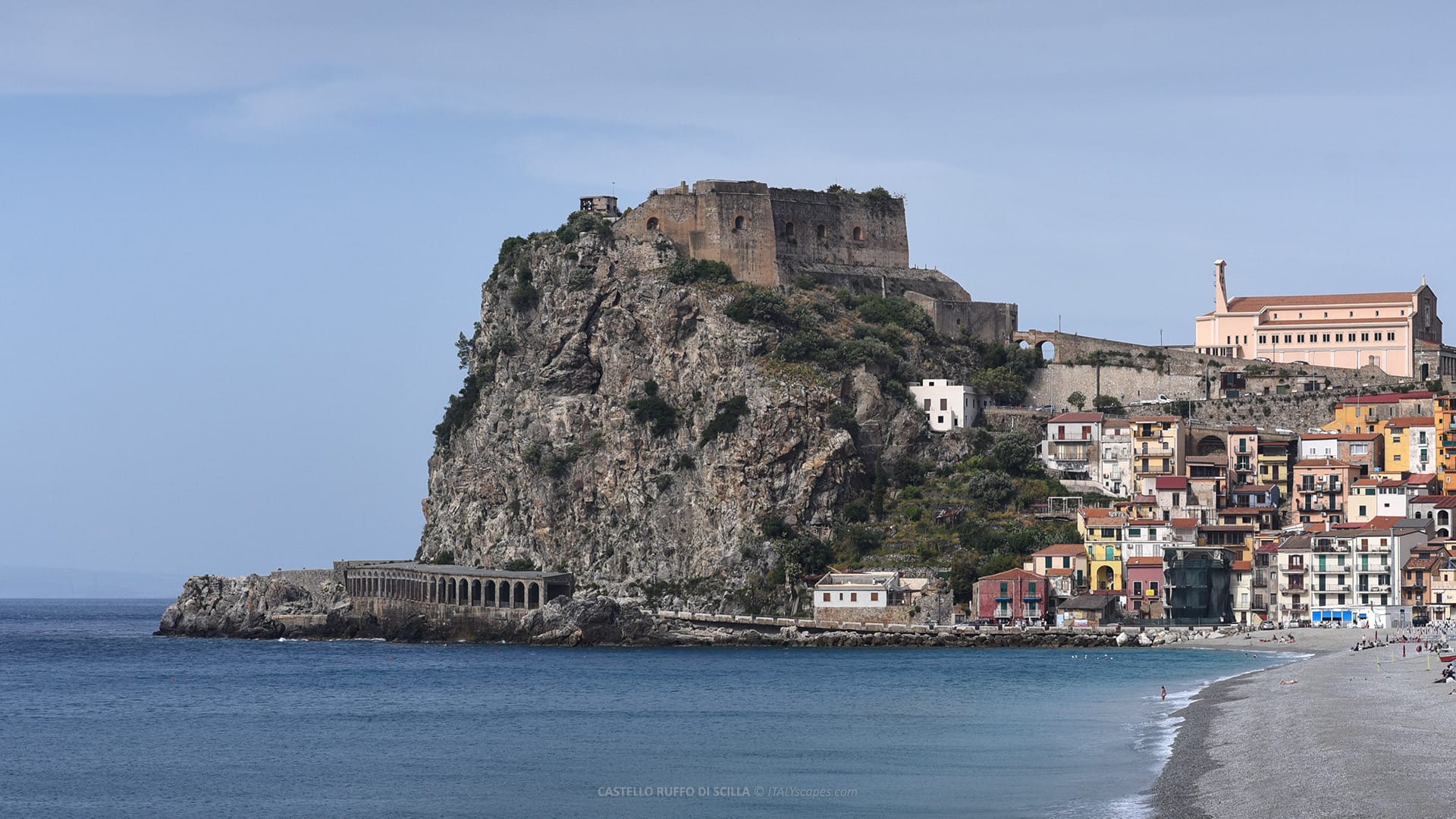
Cute little picture taking town great beach