


Buy tickets:TicketOne Simply Red will perform in Venice on Friday, June Read more [...]
-
About
Table of Contents
The Venezia Jazz Festival 2027 will bring another international music programme to Venice in summer 2027, continuing an event created by Veneto Jazz and developed around concerts staged across some of the city’s most distinctive historic and cultural locations. The upcoming edition will be the 19th edition of the festival.
Since its creation in 2008, Venezia Jazz Festival has established a format that connects live music with Venice itself. Rather than relying on a single festival ground, previous editions have used theatres, churches, cultural institutions, hotels, public spaces and other historic venues, allowing each performance to acquire a different architectural and acoustic context.
Although jazz remains fundamental to the festival’s identity, its programmes have never been limited exclusively to traditional jazz. Over the years, the event has incorporated soul, funk, world music, electronic music, contemporary composition and crossover projects, alongside performances by internationally recognised jazz musicians.
The Venezia Jazz Festival 2027 is produced by Veneto Jazz, an organisation active in the region for decades and responsible for concerts featuring some of the most important figures in international jazz and contemporary music. Its activities extend beyond Venezia Jazz Festival and include concerts, special events, educational projects and collaborations with cultural institutions.
When Will the Venezia Jazz Festival 2027 Take Place?
Venezia Jazz Festival traditionally takes place during the summer season, with concerts distributed across different dates rather than compressed into a single weekend. Previous editions have extended across several weeks, allowing individual events to operate independently while remaining part of the same overall festival programme.
For 2027, the programme has only recently begun to be assembled, and additional dates and artists will be incorporated into the schedule as they are announced. The festival’s structure makes this progressive development possible because individual concerts can be added separately rather than requiring a single fixed weekend programme.
This approach has allowed past editions to accommodate both major international artists and smaller musical projects. Large concerts can be scheduled in spaces capable of handling substantial audiences, while specialised performances can be placed in theatres, churches or cultural venues whose size and acoustics are more appropriate.
Where Will the Venezia Jazz Festival 2027 Take Place?
Venezia Jazz Festival has historically been organised as a multi-venue festival, using different locations across Venice rather than operating from a permanent festival complex. This arrangement has become one of the defining characteristics of the event and reflects the unusual urban structure of the city.
One of the venues most closely associated with the festival is Teatro La Fenice, Venice’s historic opera house. Large international performances have been presented in its main auditorium, while smaller concerts have also taken place in the Sale Apollinee, the interconnected rooms used for recitals and cultural events.
Other venues associated with previous editions have included Teatro Malibran, churches and various cultural spaces around Venice. The festival has also extended beyond conventional concert halls, taking advantage of locations whose architecture and history contribute directly to the character of a performance.
About Venice
Venice provides an unusual setting for a music festival because its historic centre contains a dense concentration of theatres, churches, palaces, museums and public squares within a relatively compact area. This architectural variety allows concerts of different scales to be distributed throughout the city without requiring purpose-built festival infrastructure.
The historic centre is formed by numerous islands separated by canals and connected by hundreds of bridges. Visitors moving between festival locations generally travel on foot, while longer journeys can be completed using the vaporetto network operating along the Grand Canal and between different areas of the lagoon.
For visitors arriving by train, Venezia Santa Lucia provides direct access to the historic city. The station opens onto the Grand Canal, allowing passengers to continue either on foot or by water bus toward San Marco, Rialto, Dorsoduro and other districts containing major cultural attractions and performance spaces.
Venice’s architecture also creates distinctive possibilities for outdoor concerts. Large public spaces are limited, making locations such as Piazza San Marco especially important when an event requires substantial audience capacity. Smaller squares and internal courtyards, by contrast, are better suited to intimate cultural programmes.
What Are the Venues of the Venezia Jazz Festival 2027?
Piazza San Marco is one of the most important locations associated with major Venezia Jazz Festival productions. Venice’s principal monumental square provides the scale required for large outdoor concerts while placing contemporary performances within a setting defined by some of the city’s most recognisable architecture.
The square is dominated by Basilica di San Marco, whose present structure developed primarily from the 11th century onward. Nearby stand the Campanile, Torre dell’Orologio and the Procuratie, creating an enclosed architectural environment unlike the conventional stadiums or arenas commonly used for large international concerts.
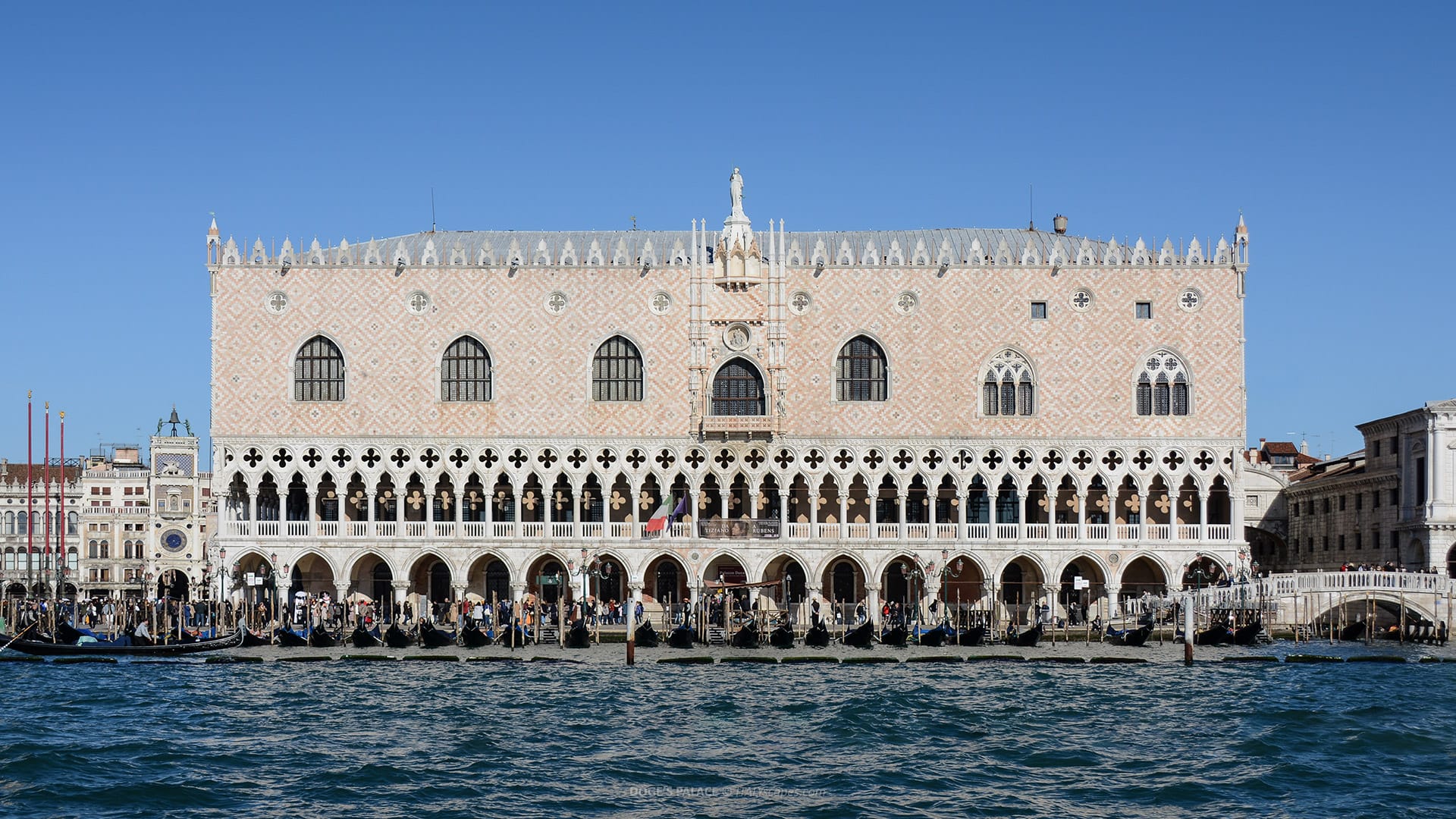
The adjoining Piazzetta San Marco extends toward the lagoon between Palazzo Ducale and the Biblioteca Marciana. Together, the square and Piazzetta formed the political and ceremonial centre of the Venetian Republic and remain among the most symbolically important public spaces in Venice.
Piazza San Marco has previously hosted large musical productions connected with Veneto Jazz. Paolo Conte performed there with a symphony orchestra in 2009, while Sting appeared with an orchestral project in 2011. Such events demonstrated how the monumental square can accommodate major contemporary concerts.
Historic theatres provide a very different environment. Teatro La Fenice, inaugurated in 1792, is internationally known for its connection with Italian opera and has hosted premieres of important works by composers including Giuseppe Verdi. It has also become one of the principal prestigious venues used by Venezia Jazz Festival.
Within the La Fenice complex, the Sale Apollinee provide more intimate performance spaces. Their smaller dimensions make them suitable for chamber-scale concerts, solo projects and performances where proximity between musicians and audience is more appropriate than the scale of the main opera auditorium.
Another historically significant venue used for cultural events in Venice is Teatro Malibran. The theatre stands on the site of the Teatro di San Giovanni Grisostomo, opened in 1678, and later took its present name in honour of the celebrated 19th-century opera singer Maria Malibran.
Churches have also played an important role in previous festival programmes. Their acoustic properties and architectural character provide particularly appropriate environments for certain jazz, world music and experimental projects. Chiesa della Pietà, associated historically with Antonio Vivaldi and the Ospedale della Pietà, has been among the locations used for musical events.
The Venezia Jazz Festival 2027 Line-Up
The Venezia Jazz Festival 2027 line-up is being developed progressively, following the format through which individual concerts and special projects can be added to the summer programme over time.
Simply Red – June 25, 2027, Piazza San Marco, 9:00 PM
Simply Red are a British soul and pop band formed in Manchester in 1985 and led by singer and songwriter Mick Hucknall. Their catalogue includes Holding Back the Years, If You Don’t Know Me by Now, Stars, Something Got Me Started, Fairground and Money’s Too Tight (to Mention), while the group has sold more than 50 million albums worldwide.
Buy tickets:TicketOneA Short History of the Venezia Jazz Festival
The Origins of the Festival
The history of Venezia Jazz Festival is closely connected with Veneto Jazz, an organisation active in international live music for decades before launching the Venice festival. Its earlier activities included concerts by major artists such as Miles Davis, Keith Jarrett, Pat Metheny and Herbie Hancock.
A particularly notable event took place in 1991, when Miles Davis performed in Castelfranco Veneto. The concert later acquired historical importance because it was his final European performance. This long experience in presenting major international musicians provided the foundation for the creation of a dedicated festival in Venice.
The first Venezia Jazz Festival was organised in 2008, establishing a format based on internationally recognised artists and distinctive Venetian venues. Bobby McFerrin and Stefano Bollani were among the musicians associated with the inaugural edition, while Teatro La Fenice quickly became one of the festival’s most prestigious locations.
Historic Venues and Piazza San Marco
From its early years, the festival developed around Venice’s existing cultural spaces rather than a purpose-built festival ground. Teatro La Fenice, smaller concert halls, churches and cultural institutions allowed organisers to match different musical projects with venues appropriate to their scale, acoustics and artistic character.
Piazza San Marco provided a setting for the festival’s largest productions. In 2009, Paolo Conte performed there with a symphony orchestra, while Sting appeared in the square with an orchestral project in 2011. These concerts demonstrated the possibility of staging major contemporary performances within Venice’s most famous monumental space.
An Expanding Musical Identity
Although jazz remained central to the event, the festival gradually adopted a much broader musical identity. Its programmes incorporated world music, soul, electronic music, contemporary composition and crossover projects, alongside musicians working more directly within American and European jazz traditions.
The 2019 edition, the festival’s 12th, clearly demonstrated this approach. One of its principal projects celebrated the 50th anniversary of ECM Records at Teatro La Fenice, with performances involving Anouar Brahem, Egberto Gismonti and Enrico Rava, artists representing very different musical traditions.
The same edition also featured Dee Dee Bridgewater and a variety of other projects spread across several Venetian venues. This flexible programming model allowed the festival to combine internationally recognised performers with more specialised concerts while maintaining a consistent focus on artistic experimentation and live performance.
Beyond the Venezia Jazz Festival 2027
A visit to Venezia Jazz Festival can easily be combined with several days exploring Venice because the main cultural attractions are distributed throughout the same pedestrian urban environment as many festival locations. A concert therefore does not require visitors to leave the historic city for a distant stadium district or exhibition complex.
Planning nevertheless requires an understanding of Venice’s geography. Straight-line distances can be misleading because canals interrupt pedestrian routes, while bridges, narrow streets and crowded areas can slow movement. Vaporetto services provide an alternative when travelling between more distant districts or lagoon islands.
Visitors staying outside the historic centre can arrive by train at Venezia Santa Lucia, by bus or tram at Piazzale Roma, or by water services from other parts of the lagoon. From these arrival points, movement within central Venice is primarily pedestrian or by public water transport.
What to Visit in Venice
Basilica di San Marco is the most immediate attraction for anyone attending an event in Piazza San Marco. The church combines Byzantine, Gothic and later architectural elements, while its interior is famous for extensive gold-ground mosaics that cover domes, vaults and walls across thousands of square metres.
Beside the basilica stands Palazzo Ducale, the former seat of the Doge and the political institutions of the Venetian Republic. Visitors can explore ceremonial chambers, government rooms, judicial spaces and the former prisons, reached through the celebrated Ponte dei Sospiri.
The Rialto Bridge crosses the Grand Canal at the historic commercial heart of Venice. Completed in the late 16th century to a design by Antonio da Ponte, the stone bridge incorporates shops along its central passage and connects the San Marco and San Polo sides of the canal.
For Venetian painting, the Gallerie dell’Accademia in Dorsoduro contain works covering several centuries of the city’s artistic development. The collection includes paintings by major Venetian masters and provides a concentrated introduction to the visual culture created during the Republic’s political and commercial prominence.
The Peggy Guggenheim Collection, also in Dorsoduro, focuses instead on 20th-century art. Located in Palazzo Venier dei Leoni on the Grand Canal, the museum includes works associated with Cubism, Surrealism and Abstract Expressionism, providing a strong contrast with Venice’s predominantly historic artistic collections.
What to Eat
Cicchetti are among the most characteristic foods for visitors exploring Venice on foot. These small portions are traditionally served in bacari and can include seafood, fish, vegetables, cured meats or cheese. Several cicchetti can be combined into an informal meal without requiring a conventional restaurant service.
Sarde in saor is a traditional Venetian preparation based on sardines combined with onions and vinegar, usually with ingredients that create a distinctive sweet-and-sour flavour. The recipe originated partly as a practical method of preserving fish and became firmly established within the culinary traditions of the lagoon.
Another common preparation is baccalà mantecato, made by working fish into a smooth, creamy consistency and usually serving it with bread or polenta. In Venetian terminology, the recipe traditionally uses stockfish, despite the word baccalà being associated elsewhere in Italy with salt-cured cod.
Fegato alla veneziana combines liver with onions and is one of the best-known traditional main courses associated with Venice. The sweetness of slowly cooked onions balances the stronger flavour of the liver, producing a dish that remains widely available in restaurants specialising in regional Venetian cuisine.
Risi e bisi combines rice and peas in a consistency traditionally positioned between risotto and soup. Historically associated with spring and the civic traditions of the Venetian Republic, the dish demonstrates the importance of rice cultivation and vegetable ingredients within the broader food culture of the Veneto.
Frequently Asked Questions about the Venezia Jazz Festival 2027
What is Venezia Jazz Festival 2027?
Venezia Jazz Festival 2027 is the 19th edition of the international music festival organised by Veneto Jazz in Venice, combining jazz with several related contemporary musical styles.
When does Venezia Jazz Festival usually take place?
The festival is generally held during the summer, with individual concerts distributed across different dates rather than concentrated into a single weekend.
Where is Venezia Jazz Festival 2027 held?
The event uses multiple venues around Venice, historically including theatres, churches, cultural institutions and major public spaces such as Piazza San Marco.
Which railway station serves central Venice?
The principal station within the historic city is Venezia Santa Lucia, situated directly on the Grand Canal and connected with the rest of Venice by walking routes and water transport.
Can Venezia Jazz Festival 2027 be combined with a sightseeing trip?
Yes. Many historic attractions and festival locations are situated within the same central pedestrian area, making it practical to combine concerts with museums, churches, palaces and other major Venetian landmarks.
-
Photos
-
Map
-
Reviews
-
Related events